by Alanna Cohen
I often see the idea that “learning happens all the time” on home education Facebook pages. It usually comes up as reassurance when someone is having a wobble and wondering whether they’re doing enough. It can be helpful, to a point.
There is learning potential in most things we do, but learning potential isn’t the same as actual learning. We can’t necessarily make a concrete statement that learning has happened just because an activity contained something that could have been learnt.
My daughter is an avid reader. If she picks up Harry Potter tomorrow and reads it for the 900th time, I can’t really call that progress in reading. She might notice something new or make a connection she hasn’t made before, but mostly she is just comfort-reading. That being said, I wouldn’t automatically say that no learning is happening either. Learning isn’t always neat or linear. Sometimes we do something and learn from it there and then. Sometimes we practise something until we can do it. Other times, experiences and ideas are processed, connected and made sense of over time. Something encountered today might apparently disappear and then emerge weeks or months later in a completely different context.
This is where I think “learning happens all the time” becomes helpful. If you’re looking for learning that unfolds over time, it can be a useful mantra to lean on when there isn’t much visible evidence of progress. Not seeing the learning immediately doesn’t mean that nothing is happening. Sometimes we have to trust the process for a while.
Where I think the phrase becomes less helpful is when we start with an ordinary activity and work backwards to find all the learning supposedly contained within it. Take baking, for example:
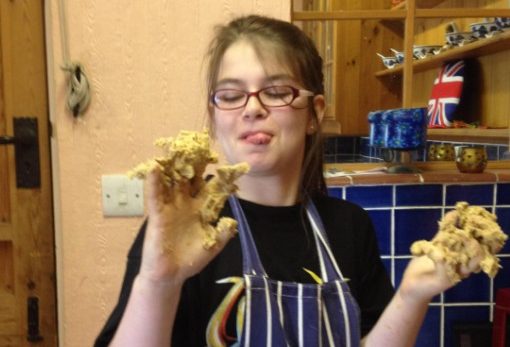
Baking is often given as an example of how much learning happens naturally through everyday life. There’s maths in weighing and measuring, literacy in reading the recipe and chemistry in combining ingredients and seeing how they change. Possibly.
Not every child who bakes a cake is learning chemistry. I remember some of my GCSE chemistry and I couldn’t even begin to explain the reactions that happen when eggs, flour, sugar, fat and baking powder are mixed together and heated. I know there is chemistry happening, but that doesn’t mean I’m learning about it while I make a cake. The same applies to maths. My daughter can already use place value, double numbers and measure ingredients. When she uses those skills while we’re baking, she is using maths skills she is already confident with rather than developing them further. Usually, we’re just making cake because cake makes the world a better place.
That doesn’t mean I can’t see progress in her baking. We’ve baked together lots of times. When she was younger, she needed much more support and it genuinely did help her to make sense of maths and reading instructions. Now she can make almost the whole cake independently and literacy and numeracy develop in other places. She might need some help with mixing if the butter is hard, an adult still operates the oven and, strangely enough, she is slightly less independent when it comes to clearing up afterwards. One of my education aims is for her to become increasingly independent and capable in everyday life and that’s where I can see progress. Something she once needed considerable help to do is now something she can largely do independently.
Even with more formal learning activities, learning doesn’t always happen in the way we think it might. A child can complete a worksheet on money without making any progress in maths. They might already understand everything on it and just be doing it for fun or to keep busy. They might be consolidating something they are still developing. They might complete the whole thing without understanding the concept any better at the end than they did at the beginning. The activity itself doesn’t tell us what has been learnt.
This is something I see frequently through my work checking home education reports. It is very easy to describe what a child has done: books read, places visited, recipes cooked, worksheets completed, documentaries watched, classes attended. Those things tell us about the experiences and opportunities that have formed part of an education, but on their own they don’t necessarily tell us what has changed.
Which leaves us with a slightly awkward question. If we can’t point at the activity and confidently say “there’s the learning” and we also accept that learning might not become visible until much later, how do we know whether progress is happening at all?
This is where I go back to aims.
In my last post Finding Confidence in Everyday Educational Decisions, I wrote about education aims as the hopes we have for what our children’s education will help them develop. The cake example shows one way those aims can help. They give us a broader picture of what we’re looking for, rather than leaving us trying to translate everything our children do into school-style outcomes.
Another of my aims for my daughter is for her to develop a sense of fairness and responsibility. When I thought about this aim, I came up with an idea of what I might expect that to look like as she grows. I might expect her increasingly to think and act on her own sense of fairness and responsibility: to notice when something seems unfair, think about why she believes it is unfair, consider different perspectives or think about what she or somebody else might do in response. I don’t need to constantly assess her against these milestones, they just give me a rough guide as to what progress could look like.
Which brings us back to that 900th reading of Harry Potter. Questions about fairness, responsibility and power appear throughout the books and we’ve talked about them. They also come up through other books, documentaries, things happening in the world, conversations and social situations. I can’t sensibly separate those experiences and decide which one might be responsible for a particular bit of learning. Ideas encountered in different places become connected, understood and used in different ways over time. Recently she started writing a story in which the main character is brought to trial before a group of dragons because they suspect she might be connected to a kidnapping. One dragon refers to her as “it” (because she is a ‘half-breed’) and insists she must be responsible but another objects. The dragon council votes on whether she should be sent to prison. When the main character asks whether she gets a say, she is ignored. Eventually another dragon points out that she hasn’t actually been charged with anything.
The scene is clearly influenced by the Ministry of Magic hearing in Harry Potter, but it isn’t just a reproduction of it. Looking at what she’d actually written, I could see her independently exploring ideas around assumed guilt, dehumanising language, voice, evidence, authority and whether the process itself was fair.
Funnily enough, when I thought about what ‘progress’ might look like against an aim of developing a sense of fairness, I didn’t have ‘start writing about assumed guilt, dehumanising language and judicial process’ in my predicted milestones list. Although I hadn’t predicted exactly what progress towards this aim would look like, having the clear aim and some idea of what progress might look like meant that it was recognisable when it came up.
The cake and the dragon story are quite different examples. With the cake, the development is fairly easy to follow. We’ve done something together repeatedly, I’ve needed to do progressively less and she can now do much more independently. I could reasonably have expected increasing independence to look something like that.
I couldn’t have predicted the dragons.
I think both matter. Sometimes learning is fairly clear and linear. Your child can’t do something, they learn how, they practise and they get better at it. Other times learning develops as they make sense of different experiences and ideas over time, and progress emerges somewhere we weren’t expecting it.
Our aims give us some idea of what to look out for without needing us to decide in advance exactly what progress must look like. Over time, what we actually observe can help us look at the bigger picture. Are we seeing movement towards our aims? Is our approach supporting what we hoped it would? Does something need more time, or should we let it go and try something different? Have we noticed something developing that we hadn’t even thought to look for?
It also gives us a much more natural way to talk about progress when we need to. Instead of trying to make every activity sound educational, we can describe the experiences our children are having and the changes we’ve actually noticed.
And sometimes a cake is just something to be enjoyed.
“Learning happens all the time” can be a useful reminder that learning doesn’t have to happen neatly, visibly or on demand. But perhaps we don’t need learning to happen all the time. We just need to get better at noticing it when it does.
Author Bio: Alanna Cohen is a home-educating parent and trustee with the Education Otherwise report checking team. She is interested in reflective practice, authentic parent voice and helping families to develop meaningful ways to make sense of and express the learning that already exists within their children’s education.
